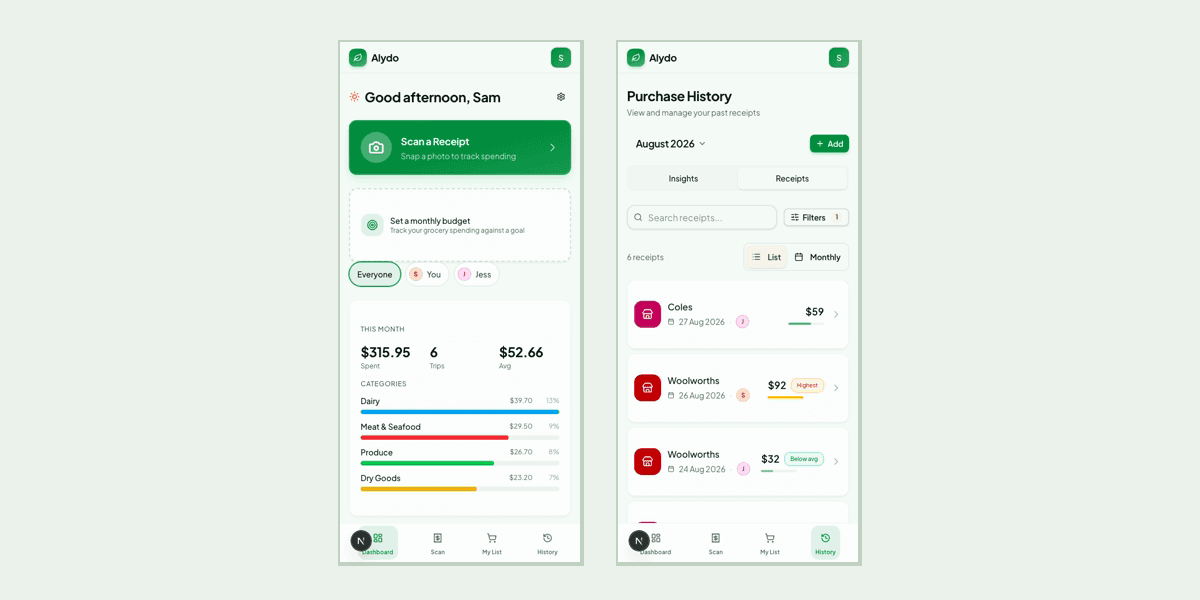
Two people, one house, one trolley between them, and two phones that each know about half the money. One of you does the Woolworths run, the other stops at Coles on the way home, and neither app has ever seen the whole month.
That was Alydo until this week. A grocery history is a household thing, and the app was insisting on treating it as a personal one. Now it does not have to.
What Changed
You invite whoever you shop with by email. Once they accept, their receipts join yours: one history, one monthly total, one shopping list, and insights built from both sides of it. It runs in both directions. They see yours, you see theirs, from the moment they accept and not a minute before.
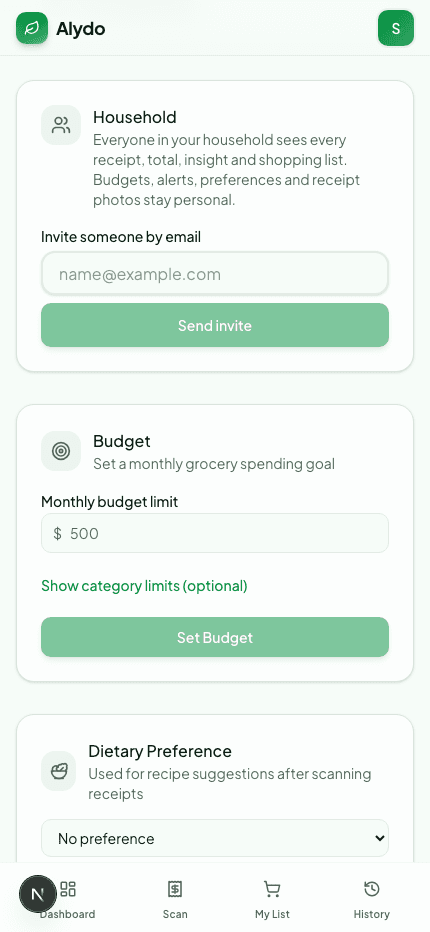
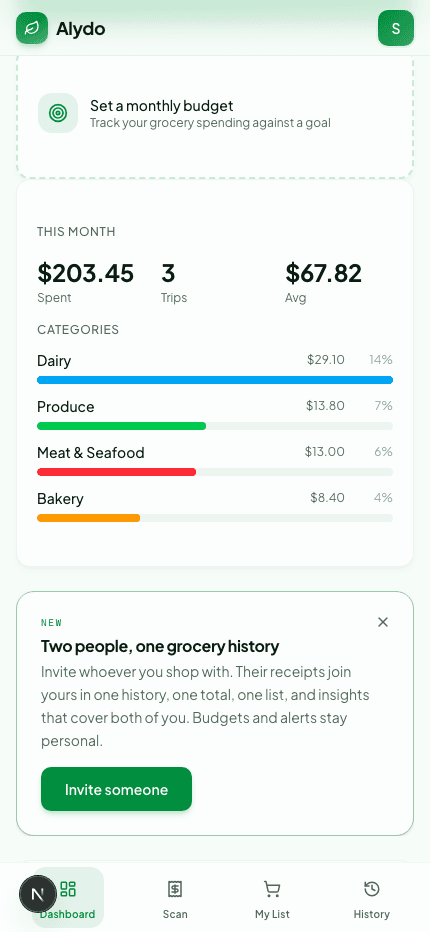
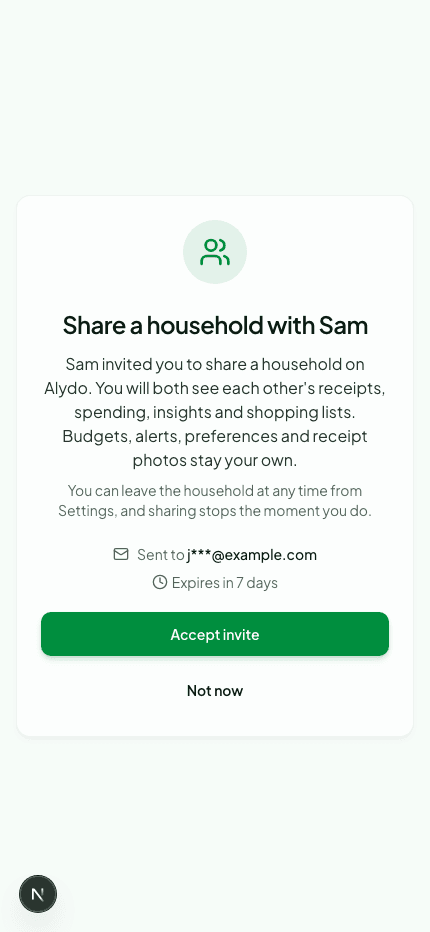
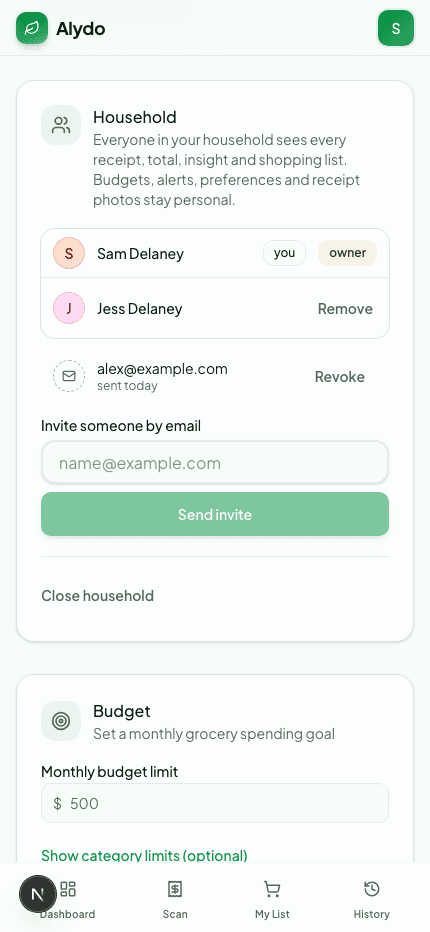
The sentence on that Settings card is the whole promise in one line: everyone in your household sees every receipt, total, insight, shopping list and the monthly budget. Alerts, preferences and receipt photos stay personal. The invite email says it, the accept screen says it, and the Settings card says it, word for word. The person being asked to share should be reading the same sentence as the person asking.
What Stays Yours
Sharing a history is not sharing an account. Your price alerts, your dietary preference and your notification settings stay yours. So do the receipt photos: your household sees the parsed receipt, its store, its date, its items and their prices, and never the picture you took.
The monthly budget was on that list at launch and is not any more. A household that pools its receipts is measuring them against one limit, and two limits one card apart were quietly counting different people. There is now a single budget for the household: anyone in it can see it and change it, and the bar shows how much of it each person has spent.
Every receipt also carries a mark for whoever scanned it. In the history below, J is Jess and S is Sam.
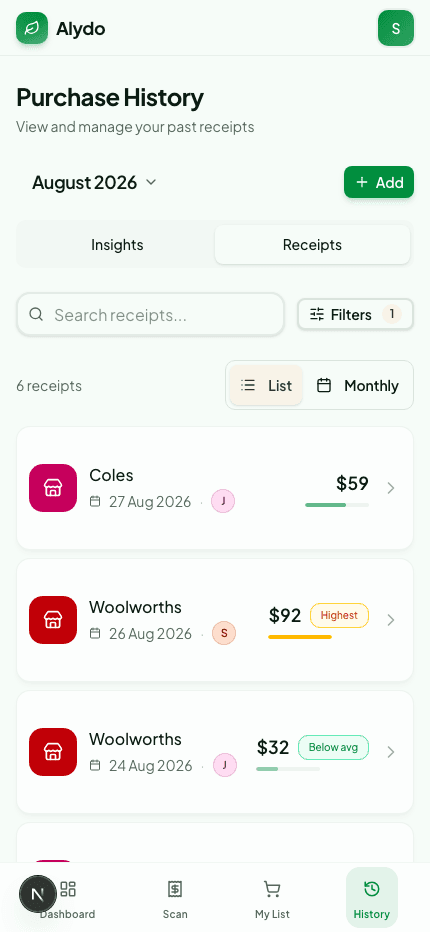
Those marks are load bearing. You can read every receipt in the household, and you can edit or delete only the ones you scanned. Open a receipt of someone else's and there is nothing on it to change.
Sharing a shopping list is not the same thing, and it never opens your history. Someone you share a list with sees the list. They do not see your receipts or what you spend, and suggestions on a shared list come from their own shopping rather than yours. A household is the only thing that pools a history, and you join one on purpose.
One thing worth knowing before you go looking for a rounding bug: that list view shows whole dollars. The Coles receipt on 27 August reads $59, and the receipt itself is $58.75. Open it and you get the cents back.
Turning It On
- Open Settings, find Household, type an email address, press Send invite.
- They open the link and read what they are agreeing to before they agree to it: what is shared, what is not, and that they can leave whenever they want. The invite expires in seven days, and it only opens for the address it was sent to.
- Back in Settings, the household lists everyone in it and marks the owner. An invite nobody has accepted yet can be revoked. A member can be removed. Anyone can leave on their own, and the owner can close the household outright. Sharing stops immediately in both directions, and every receipt and list stays with the person who created it.
What Is Not There Yet
- No household screen in the phone app. Inviting, removing and leaving all happen on the web app for now.
- No per receipt privacy. Sharing is your whole grocery history or none of it. There is no way to hold one receipt back.
- One household per person. To join a different one you leave the one you are in first.
Those are limits, not hints. We would rather name them here than let you find the first one by hunting through the phone app for a screen that is not there.
Where to Start
Settings, then Household, then one email address. If the person you shop with already uses Alydo, their history joins yours the moment they accept. If they do not, the invite is also a decent reason to start. The same receipt scanning that ticks items off your shopping list now feeds a total that finally covers everyone paying into it.